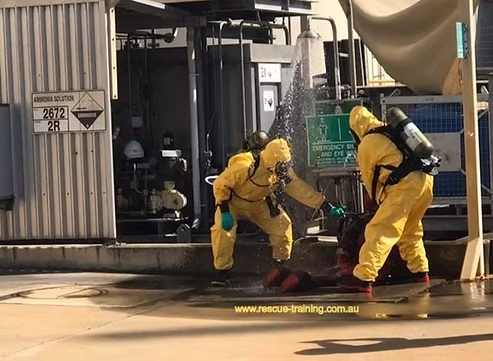
High-risk rescue operations above ground present unique challenges that demand precision, preparation, and professionalism. Whether in construction, industrial maintenance, mountain rescues, or emergency response, working at heights involves hazards such as falls, unstable surfaces, weather extremes, and confined spaces. Implementing best practices for high-risk rescue ensures the safety of both rescuers and victims while enabling efficient and effective operations.
Understanding the Challenges
Working above ground introduces a range of hazards. Rescuers must navigate unstable scaffolding, ladders, cranes, or natural terrain, often while carrying equipment or managing a distressed victim. The elevated environment magnifies corporate working at heights training WA the consequences of mistakes, making attention to detail critical. Environmental factors such as high winds, rain, or low visibility further increase risk, emphasizing the importance of pre-operation planning and situational awareness.
Proper Planning and Risk Assessment
Successful high-risk rescue begins with thorough planning. Before any operation, rescuers should conduct a comprehensive risk assessment to identify hazards, evaluate structural integrity, and select the safest rescue methods. Contingency plans should address worst-case scenarios, including equipment failure, sudden weather changes, or victim complications. By anticipating potential obstacles, teams can minimize exposure to danger and improve operational efficiency.
Specialized Equipment and Gear
Using appropriate equipment is fundamental to working safely above ground. Rescuers rely on harnesses, ropes, pulleys, carabiners, helmets, and fall arrest systems. Equipment must be regularly inspected, properly maintained, and used according to manufacturer guidelines. In high-risk scenarios, mechanical advantage systems and specialized rescue stretchers allow rescuers to safely lift or lower victims without compromising safety.
Training and Skills Development
High-risk rescue requires advanced technical skills. Rescuers must be proficient in rope handling, anchoring techniques, rappelling, ascending, and victim stabilization. Training in first aid, emergency evacuation, and stress management is equally important. Regular simulation exercises and drills ensure that rescuers can respond calmly and efficiently in real-world emergencies, building both competence and confidence.
Communication and Team Coordination
Clear communication is essential during high-risk operations. Team members must maintain constant contact, use standardized hand signals, and follow pre-established commands. Coordination ensures synchronized movements, prevents accidents, and allows for quick adjustments in dynamic conditions. Additionally, effective communication with on-site personnel and other emergency services enhances safety and operational success.
Situational Awareness and Safety Mindset
Rescuers must maintain situational awareness at all times. This involves monitoring environmental changes, equipment status, and team movements. Adhering to safety protocols, avoiding shortcuts, and maintaining a safety-first mindset reduces the likelihood of accidents. Prioritizing personal safety while rescuing others is not only practical—it is essential.
Conclusion
High-risk rescue operations above ground demand meticulous planning, proper equipment, advanced skills, and effective teamwork. By following best practices such as comprehensive risk assessment, specialized training, situational awareness, and strict adherence to safety protocols, rescuers can minimize risks while effectively saving lives. Ultimately, a proactive approach to safety and preparedness ensures that high-risk rescues are conducted with precision, professionalism, and maximum protection for everyone involved.
